Following a traditional, donor-based model, a philanthropist might fund an ambitious programme to tackle youth employment. The charity receives money to create a training hub offering mentoring, digital skills and interview practice. Hundreds of young people benefit from the project.
But the charity's model is designed around a fixed 2-year grant, and once that funding cycle ends, the project has to pause while alternative funding is sourced.
There’s nothing inherently wrong with this approach. Lots of important initiatives are sustained through ongoing donor support. But in certain circumstances, philanthropy can have a more transformative effect when it avoids building long-term dependency.
The Turner Kirk Trust operates in this way. Rather than funding projects indefinitely, we focus on catalysing new, innovative solutions that can scale to achieve wider impact beyond the scope of our funding.
We do that by supporting early-stage ideas to build the proof of concept and evidence base they need to become self-sustaining in the long term. That might be by attracting large-scale institutional funding or designing commercially viable models that remove the need for ongoing external support.
When projects are dependent on philanthropic funding, their growth is constrained by the scale of the donor's resources. No one philanthropist can provide the scale of funding required to make a tangible and lasting impact on the major problems that we face as a society. But we can support charities to test and prove their bold innovative ideas, so these can later be driven forward on a larger scale by government and institutional funders.
Philanthropists who tie themselves to funding the same initiatives year after year also limit their own capacity to make an impact in other areas or on other projects. By focusing on injecting catalytic funding instead, they can scale their own impact by supporting the early stages of many different initiatives over time. This enables them to respond to evolving challenges and explore new and experimental ideas that align with their expertise and priorities.
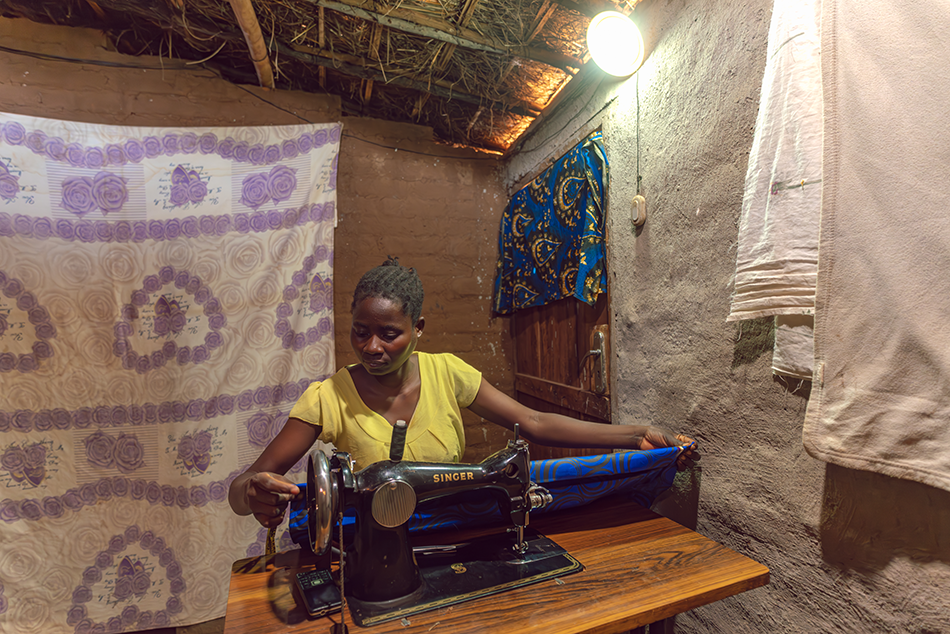
SolarAid's Light a Village project is a great example of the Turner Kirk Trust’s approach in practice. We funded a 12-month pilot to test a new commercial model – an energy-as-a-service model – to combat energy poverty and provide sustainable and safe lighting to the residents of Kasakula village in Malawi.
This successful pilot has now snowballed into a district and national-level scale-up of the initiative, taken up and driven forward by several companies and the Malawian Ministry of Energy. This is leading to sustained, large-scale transformation in the fight against energy poverty across rural sub-Saharan Africa that wouldn’t have been possible without the experimental pilot.
In this way, philanthropy has the potential to unlock systemic change, enabling impactful projects to grow far beyond the reach of individual donors.
Of course, there are many different and equally valuable approaches to philanthropy. But for those, like us, who are best placed to support early-stage, exploratory projects, the opportunity lies in avoiding long-term dependency and instead focusing on backing charities through the seed and innovation phases of their work.
This approach allows the Turner Kirk Trust to focus our efforts where they can have the biggest impact: catalysing new thinking and unlocking solutions that might otherwise never have the chance to emerge.
"When projects are dependent on philanthropic funding, their growth is constrained by the scale of the donor's resources. No one philanthropist can provide the scale of funding required to make a tangible and lasting impact on the major problems that we face as a society."